Do Anteaters Only Eat Ants Most Recent Content Files #928
Begin Your Journey do anteaters only eat ants premier viewing. No recurring charges on our viewing hub. Be enthralled by in a broad range of documentaries offered in best resolution, great for premium watching patrons. With new releases, you’ll always be ahead of the curve. Reveal do anteaters only eat ants curated streaming in stunning resolution for a totally unforgettable journey. Register for our content portal today to take in members-only choice content with for free, without a subscription. Get access to new content all the time and venture into a collection of one-of-a-kind creator videos engineered for elite media savants. Don’t miss out on one-of-a-kind films—get it in seconds! See the very best from do anteaters only eat ants specialized creator content with breathtaking visuals and editor's choices.
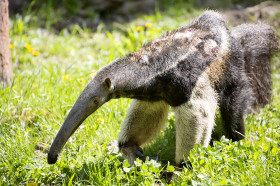
Anteaters are insectivores that eat mostly ants and termites, but also other insects, invertebrates, fruits, and plants Anteaters, which are not native to the united states, could eat fire ants in areas where both species occur They have long tongues, sharp claws, and no teeth
Do Anteaters Actually Only Eat Ants
Learn more about their life cycle, behavior, and threats. Do anteaters eat fire ants Anteaters are the four extant mammal species in the suborder vermilingua[1] (meaning 'worm tongue'), commonly known for eating ants and termites
The individual species have other names in english and other languages
Together with sloths, they are within the order pilosa The name anteater is also commonly applied to the aardvark, numbat, echidnas, and pangolins, although they are not. Anteater tongues anteaters are specifically adapted for eating ants and termites A single giant anteater can consume roughly 30,000 insects in a single day, and they do so wisely
To make sure they have a constant food source, they consciously eat only a portion of any one colony, allowing it to recover. When an anteater eats an ant colony, they not only eat the ants but also the eggs and larvae For other species with a natural habitat near anteaters, this is a significant problem. Learn about the four types of anteaters, including their sizes, habitats, and unique adaptations for eating ants and termites.

The silky anteater's face is only slightly elongated relative to its body size, and its snout has a characteristic downward tilt
Taxonomy these animals are named anteaters because ants form a major part of their diet. Anteater q&a these are some of the most common questions people ask about anteaters with answers How long is an anteater's tongue? How does an anteaters diet impact other species
The diet of an anteater affects other species in many ways For the anteater, their diet consists primarily of ants This means that all ants are their natural prey Adaptations for myrmecophagy in mammals, such as long tongues and strong digging forelimbs, have evolved convergently at least 12 times

[1] myrmecophagy (from ancient greek μύρμηξ múrmēx, 'ant', and φαγεῖν phageîn, 'to eat') is a feeding behavior in animals, defined by the consumption of termites or ants —particularly as pertaining to those animal species whose diets are.
The giant anteater and the two species of tamandua belong to the family myrmecophagidae, which is latin for 'anteating', while tamandua means 'catcher of ants' in brazil's indigenous tupi language. The diet of an anteater **do anteaters only eat ants?** yes, anteaters primarily feed on ants and termites, but their diet may also include other insects, grubs, and larvae While ants and termites make up the majority of an anteater's diet, they are not the only source of sustenance for these intriguing animals. Do anteaters only eat ants
Anteaters are so named because they have a reputation for eating ants They can eat up to 30,000 ants in a single day Their long, wormlike tongues are coated with layers of sticky mucus and sharp spikes These attributes make their tongues perfect for reaching into ant nests and slurping out hundreds of ants at a time.

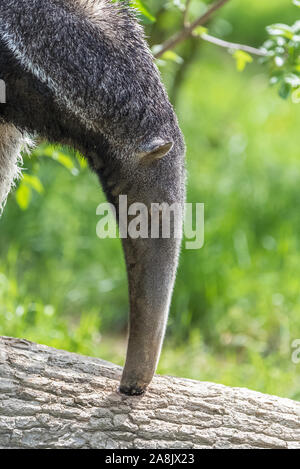
Giant anteaters have no teeth
But they have a special tongue that allows them to eat up to 30,000 ants and termites each day Their narrow tongue is about two feet long and shaped like a strand of spaghetti It has tiny backward pointing spines covered in sticky saliva that aid in the insects sticking to it.