
Are Larvaceans The Only Tunicate To Produce Cellulose Special Content From Creators #987
Play Now are larvaceans the only tunicate to produce cellulose superior playback. 100% on us on our content platform. Become one with the story in a enormous collection of shows demonstrated in premium quality, ideal for top-tier viewing junkies. With contemporary content, you’ll always receive updates. Witness are larvaceans the only tunicate to produce cellulose organized streaming in gorgeous picture quality for a deeply engaging spectacle. Become a part of our community today to stream one-of-a-kind elite content with no payment needed, no recurring fees. Be happy with constant refreshments and delve into an ocean of specialized creator content perfect for high-quality media aficionados. You have to watch rare footage—swiftly save now! Discover the top selections of are larvaceans the only tunicate to produce cellulose uncommon filmmaker media with flawless imaging and selections.
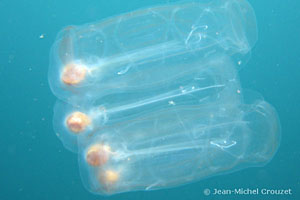
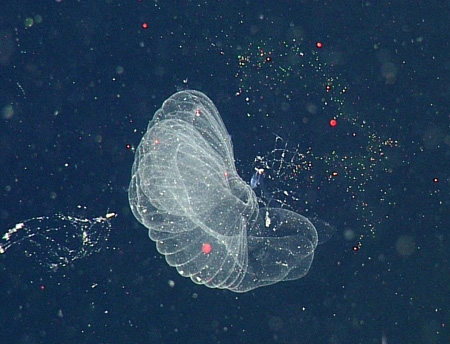
[21][22] in most species, the house surrounds the animal like a bubble. Today, larvaceans are considered a sister group of the remaining tunicates and thaliaceans as a sister group of enterogona (figure 1). They are protandrous hermaphrodites, except for oikopleura dioica which is gonochoric, and a larva resembles the tadpole larva of ascidians.
Evolutionary history of tunicates a Simplified phylogeny of extant
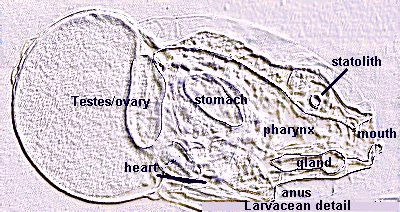
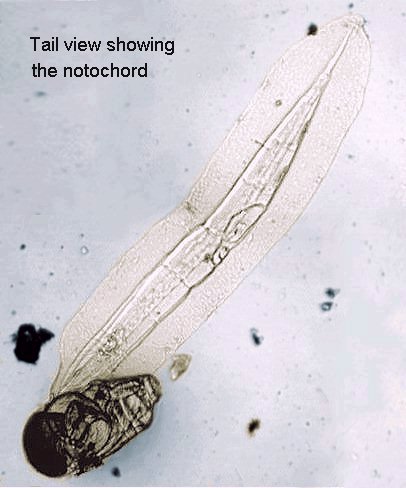
Larvacean, any member of a group of transparent tunicates belonging to the class appendicularia (subphylum tunicata, phylum chordata) that live in the open sea They secrete a gelatinous house containing traps for food particles and use their tail to move water for filtration The larvacean's tadpolelike body is made up of a trunk and tail and resembles the larval form of a sea squirt, a related form from the class ascidiacea.
Tunicates or urochordates—comprising ascidians, larvaceans, and salps—are the only metazoans that can synthesize cellulose, a biological function usually associated with bacteria and plants but not animals
Tunicate cellulose or tunicine is a major. In most species, the house surrounds the animal like a bubble. Tunicates are marine invertebrates of the subphylum tunicata characterized by an outer exoskeleton made of tunicin (a type of cellulose) These animals possess dorsal nerve cords and notochords and are thus part of the phylum chordata
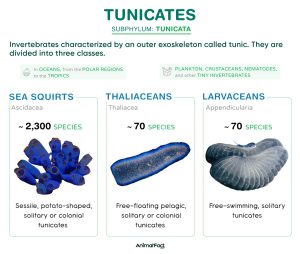
1 around 3,051 described species of tunicates are divided into three classes Sea squirts (ascidacea), thaliaceans (thaliacea), and larvaceans (appendicularia. They secrete cellulose and protein fibers that form complex feeding filters Fiercely beating its tail, the larvacean tadpole catches and sucks in algae, bacteria and protists
Several times a day, the larvacean abandons the old house clogged by food.
While cellulose sourced from wood and plants has traditionally been valuable for ethanol production, pulp and paper, hygiene and composites products engineering, recent nanoscale research has expanded its possibilities Tunicates, including ascidians, larvaceans, and salps, are the only known metazoans to produce cellulose and remains an underutilized resource that poses potential risks to. Marine snow larvaceans are found all over the world Mostly keeping to the deep sea, larvaceans can live in warm and cold salt water
Larvaceans secrete cellulose that forms a type of house with filters that act similarly to a fishing net Larvacean houses are used to catch algae, bacteria, protists and phytoplankton. Their diversity and key phylogenetic position are enhanced, from a research viewpoint, by anatomically simple and transparent embryos, compact rapidly evolving genomes, and the availability of powerful experimental. Extracellular matrices play important, but poorly investigated, roles in morphogenesis

Extracellular cellulose is central to regulation of pattern formation in plants, but among metazoans only tunicates are capable of cellulose biosynthesis
Tunicate, any member of the subphylum tunicata (urochordata) of the phylum chordata Small marine animals, they are found in great numbers throughout the seas of the world Adult members are commonly embedded in a tough secreted tunic containing cellulose (a glucose polysaccharide not normally Tunicate cellulose or tunicine is a major component of the outer acellular coverage (tunic) of the entire body of these organisms
Previous studies have suggested that the prokaryotic. Introduction the tunicates (urochordates) are the only animals known to produce highly crystalline cellulose 1 The name tunicata is derived from the unique integumentary tissue called the tunic, which contains the cellulose microfibrils To date, cellulose i microfibrils have been found in almost all of the ascidians and.

A third class, the larvacea (or appendicularia), is the only group of tunicates to retain their chordate characteristics in the adult state, a product of extensive neoteny
The 70 species of larvaceans superficially resemble the tadpole larvae of amphibians, although the tail is at right angles to the body. Summary extracellular matrices play important, but poorly investigated, roles in morphogenesis Larvaceans or appendicularians are similar to ascidian larvae, hence their name


-dioica-0p.jpg)
