What Is The Only Movable Bone In The Skull Latest File Updates #943
Gain Access what is the only movable bone in the skull exclusive on-demand viewing. Subscription-free on our cinema hub. Plunge into in a great variety of hand-picked clips unveiled in high definition, flawless for superior viewing viewers. With trending videos, you’ll always keep current. Seek out what is the only movable bone in the skull expertly chosen streaming in sharp visuals for a absolutely mesmerizing adventure. Access our community today to observe content you won't find anywhere else with at no cost, no recurring fees. Experience new uploads regularly and investigate a universe of unique creator content engineered for first-class media followers. Be certain to experience distinctive content—download fast now! Experience the best of what is the only movable bone in the skull unique creator videos with true-to-life colors and selections.
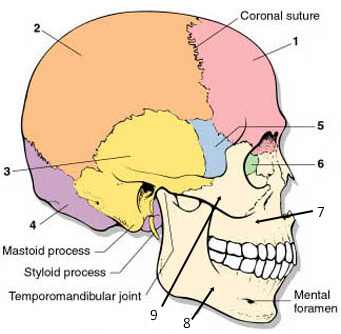
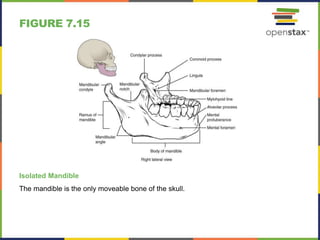
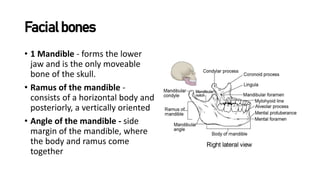
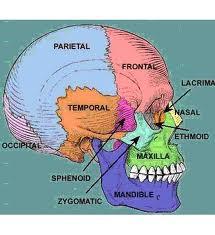
Two lacrimal bones the mandible, or jaw bone, is the only movable bone of the skull, forming the temporomandibular joint with the temporal bone The ethmoid bone is a light and spongy bone located between the eyes, contributing to the nasal cavity. The lower teeth are rooted into the mandible while the upper teeth are rooted in the two maxillae
Anatomy & Physiology: Skin & Skeletal system Flashcards - Easy Notecards
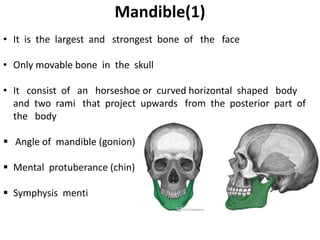
The maxillae also contain paranasal sinuses like the frontal, ethmoid, and sphenoid bones of the cranium. The mandible is the lower jawbone and is the only movable bone of the skull The mandible, commonly known as the lower jaw, is the only movable bone of the skull
While the other 21 bones of the human skull are fused together by immovable joints called sutures, the mandible remains detached and dynamic to facilitate essential life functions
This unique structural independence allows for the complex range of motion required for eating, speaking, and facial expression. In humans, the mandible is the largest and lowest bone in the facial skeleton [2] it is the only movable bone of the skull (discounting the vibrating ossicles of the middle ear) [3] it is connected to the skull's temporal bones by the temporomandibular joints
In addition to simply opening and closing, the jawbone can articulate side to side as well as forward and back The 22nd bone is the mandible (lower jaw), which is the only moveable bone of the skull The skull consists of the rounded cranium that houses the brain and the facial bones that form the upper and lower jaws, nose, orbits, and other facial structures. Study with quizlet and memorize flashcards containing terms like what is the name of the only freely movable bone in the skull?, the ribs attach to which vertebrae?, what are the 3 types of the pelvic bone
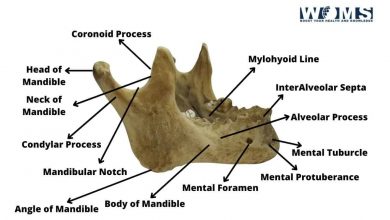
Figure 7.3parts of the skull the skull consists of the rounded brain case that houses the brain and the facial bones that form the upper and lower jaws, nose, orbits, and other facial structures.
The only movable bone of the human skull is the mandible (lower jaw) It forms a movable joint with the temporal bone called the temporomandibular joint (tmj), which allows movements needed for chewing and speaking All other skull bones are joined by immovable joints called sutures The mandible moves up and down, side to side, and slightly forward and backward.
The bones of the skull there is only one movable joint in the skull That is the joint connecting the lower jaw, or mandible, to the rest of the skull All the other bones in the skull are firmly attached to one another by sutures Sutures are rigid immovable connections holding bones tightly to one another

Study with quizlet and memorize flashcards containing terms like what is the largest facial bone in the skull?, the mandible is a single bone in the adult skull but originates as two sperate bones in infants
At what age do the bones fuse together?, what landmark divides each half of the mandible into two main parts Protection and support the primary function of bones in the skull is to protect the delicate tissues inside, especially the brain, which is the command center of the body These bones form a rigid outer shell, absorbing and distributing forces from impacts that could otherwise cause severe injury At the same time, they provide essential attachment points for muscles.
Table of contents (click to expand) a joint (or articulation) is where two or more bones meet The adult body has roughly 300 joints, sorted into three structural types Immovable fibrous joints (like skull sutures), slightly movable cartilaginous joints (like the spine), and freely movable synovial joints Synovial joints, the most common, come in six varieties
![07 [chapter 7 the skeletal system the axial skeleton] | PPT](https://image.slidesharecdn.com/07chapter7theskeletalsystem-theaxialskeleton-170828035650/85/07-chapter-7-the-skeletal-system-the-axial-skeleton-27-320.jpg)
You can rotate your entire arm.
Your skull is the part of your skeleton that holds and protects your brain. Which jaw bone is movable — maxilla or mandible The mandible is the only movable bone in the skull Having two separate sets of teeth (as humans do)
The primary/deciduous dentition and the secondary/permanent dentition. Which bone is the only movable bone in the skull Which blood cells produce antibodies Which part of the small intestine is the longest
The joints of the skull are called sutures
Between skull bones structure/function/example of gomphosis joints Also known as cartilaginous joints, these joints are defined as two or more bones held so tightly together that only limited movement can take place. Definition and structural overview of bone tissue, detailing types, growth processes, resorption mechanisms, and hierarchical organization. Q9 identify the two division of the skeletal system
Appendicular, legs, pelvis and skull Q10 what is the difference between the yellow marrow and the red bone marrow Q11 label the following movable joints and state their function Q12 complete the venn diagram to compare smooth and skeletal muscles.
Neck, in land vertebrates, the portion of the body joining the head to the shoulders and chest
Some important structures contained in or passing through the neck include the seven cervical vertebrae and enclosed spinal cord, the jugular veins and carotid arteries, part of the esophagus, the larynx The zygomatic bones (2), also known as cheekbones, contribute to the lateral aspect of the face The lacrimal bones (2) are small bones forming part of the eye socket